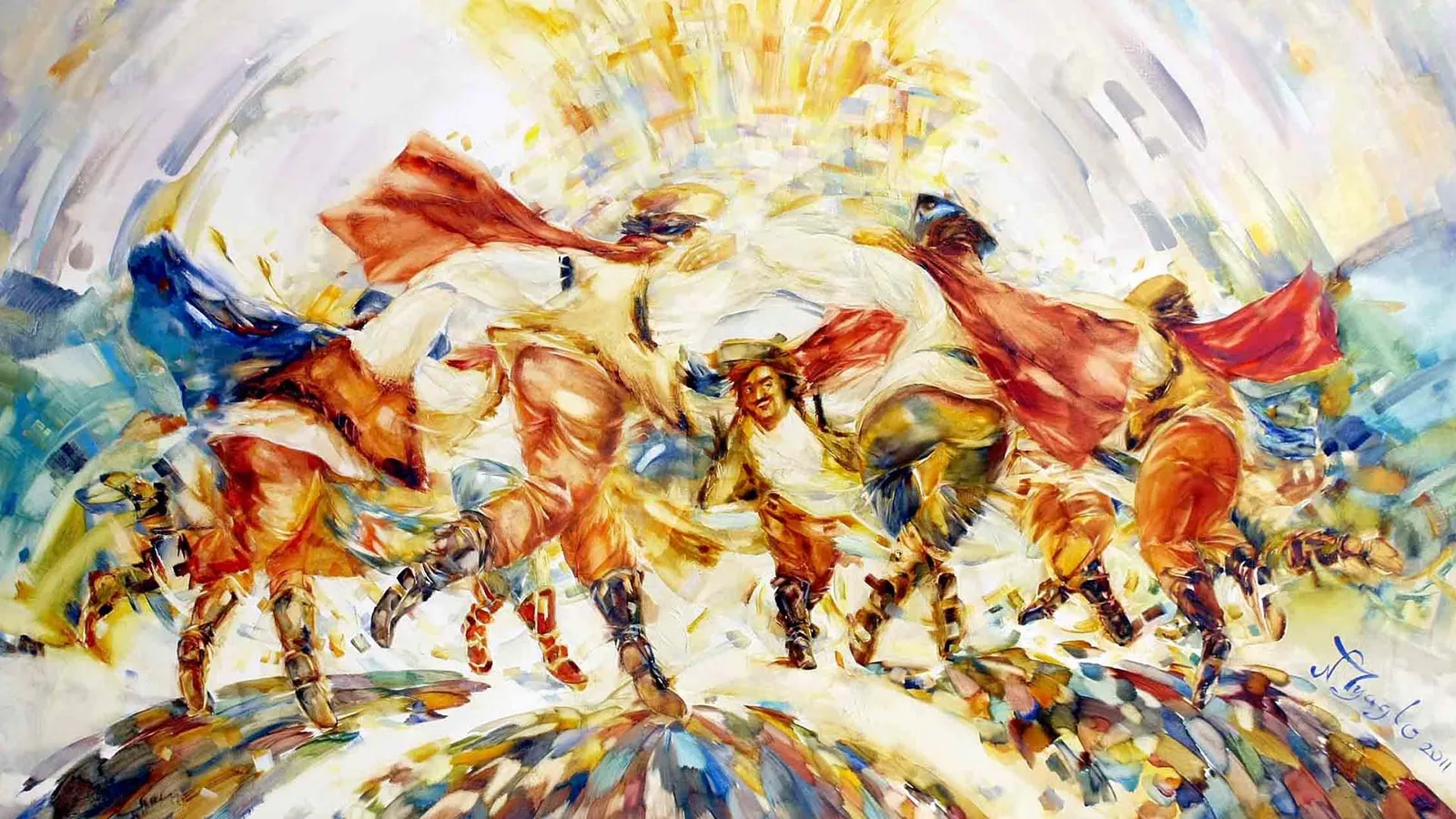
Ask almost anyone to picture a Ukrainian dance and they’ll picture this one: a dancer launching into the air, legs kicked out in a full split, arms crossed proudly over the chest. Hopak is widely regarded as Ukraine’s national dance, and for good reason — few folk dances anywhere pack in this much sheer athletic display.
Hopak traces its roots to the Zaporozhian Cossacks of the Dnipro region, where it began less as a choreographed performance and more as a display of a warrior’s fitness, agility and nerve. Historically it was danced by men, and the vocabulary reflects that: deep squatting kicks (the ‘prysiadka’), spinning jumps, and daring solo passes where each dancer would try to outdo the one before him. It wasn’t unusual for Hopak to double as a kind of good-natured competition — a chance to show off in front of your peers.
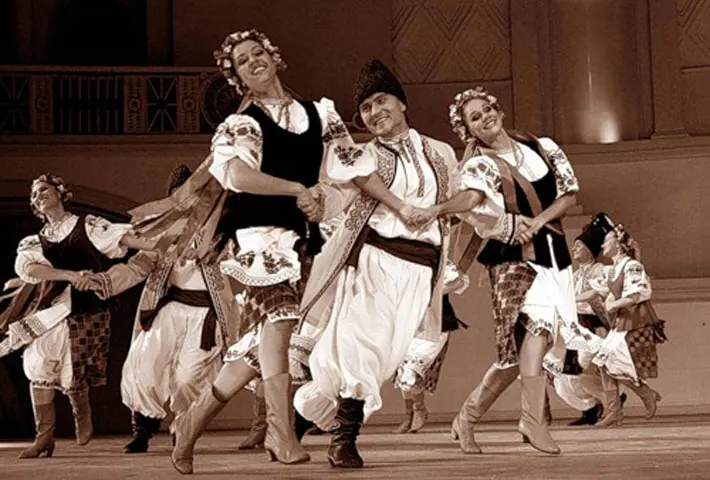
As Hopak moved from village celebration to the concert stage over the 19th and 20th centuries, it grew into something bigger — a full ensemble showcase with women’s sections, partner work, and elaborate staging, while keeping the male soloists’ acrobatics as its centerpiece. That’s the version most people know today: it’s very often the piece a dance ensemble saves for last, because there’s nowhere to go after it.
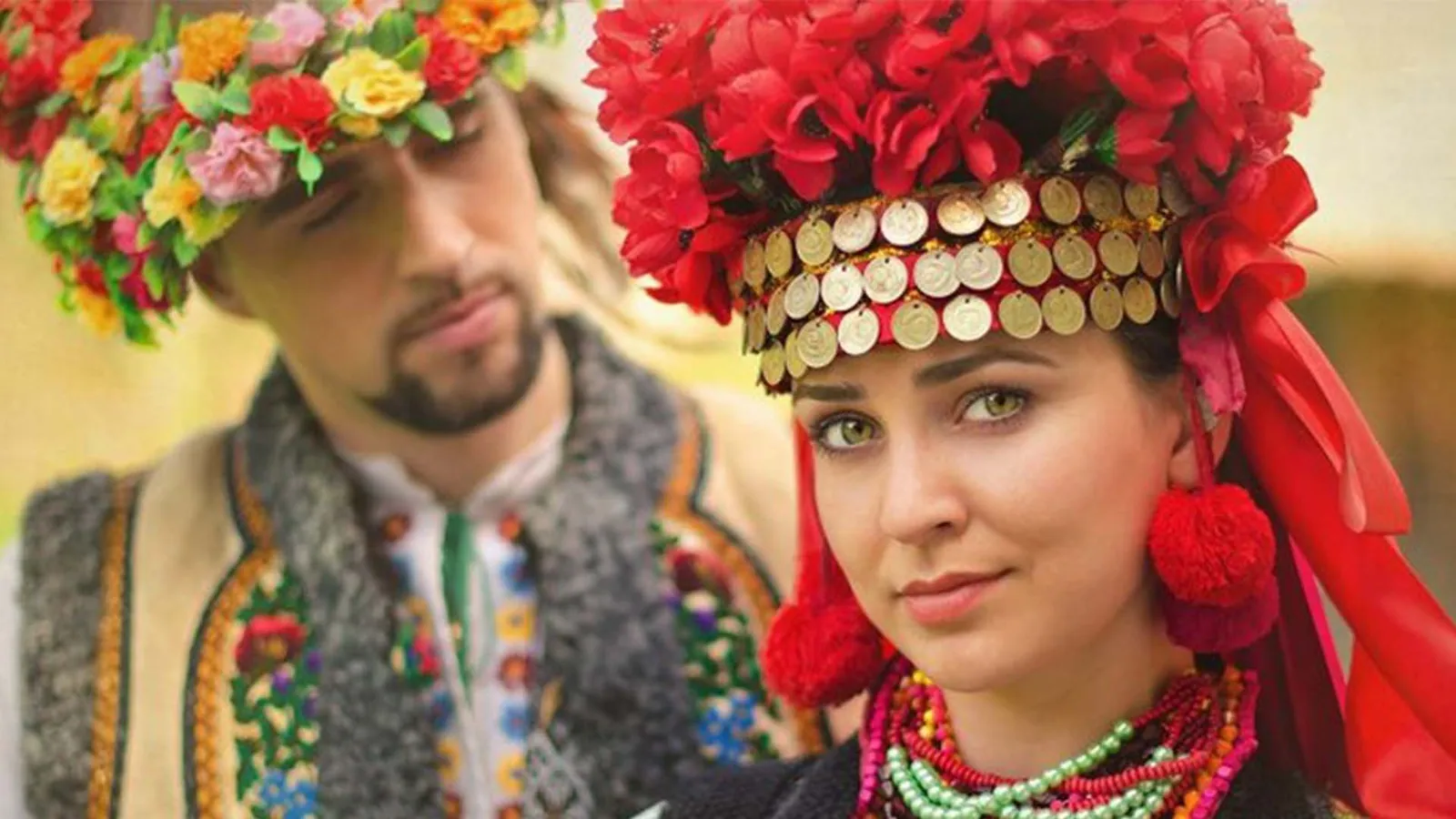
Beyond the theatrics, Hopak has taken on real symbolic weight. It’s performed at Ukrainian cultural festivals around the world, taught in diaspora dance schools as a rite of passage for young dancers, and remains one of the clearest, most recognizable expressions of Ukrainian identity on a stage — a dance built, quite literally, to leave an impression.