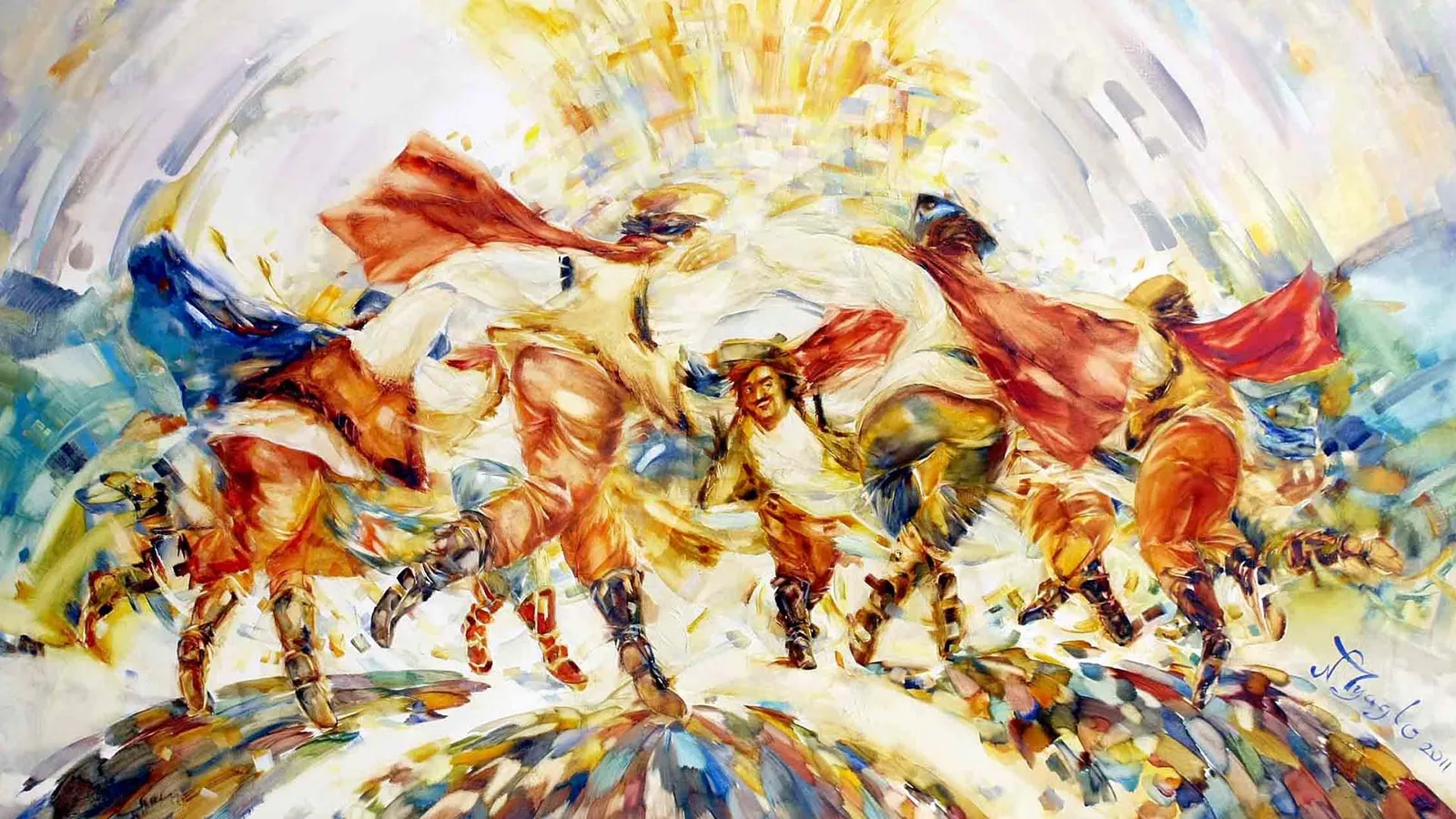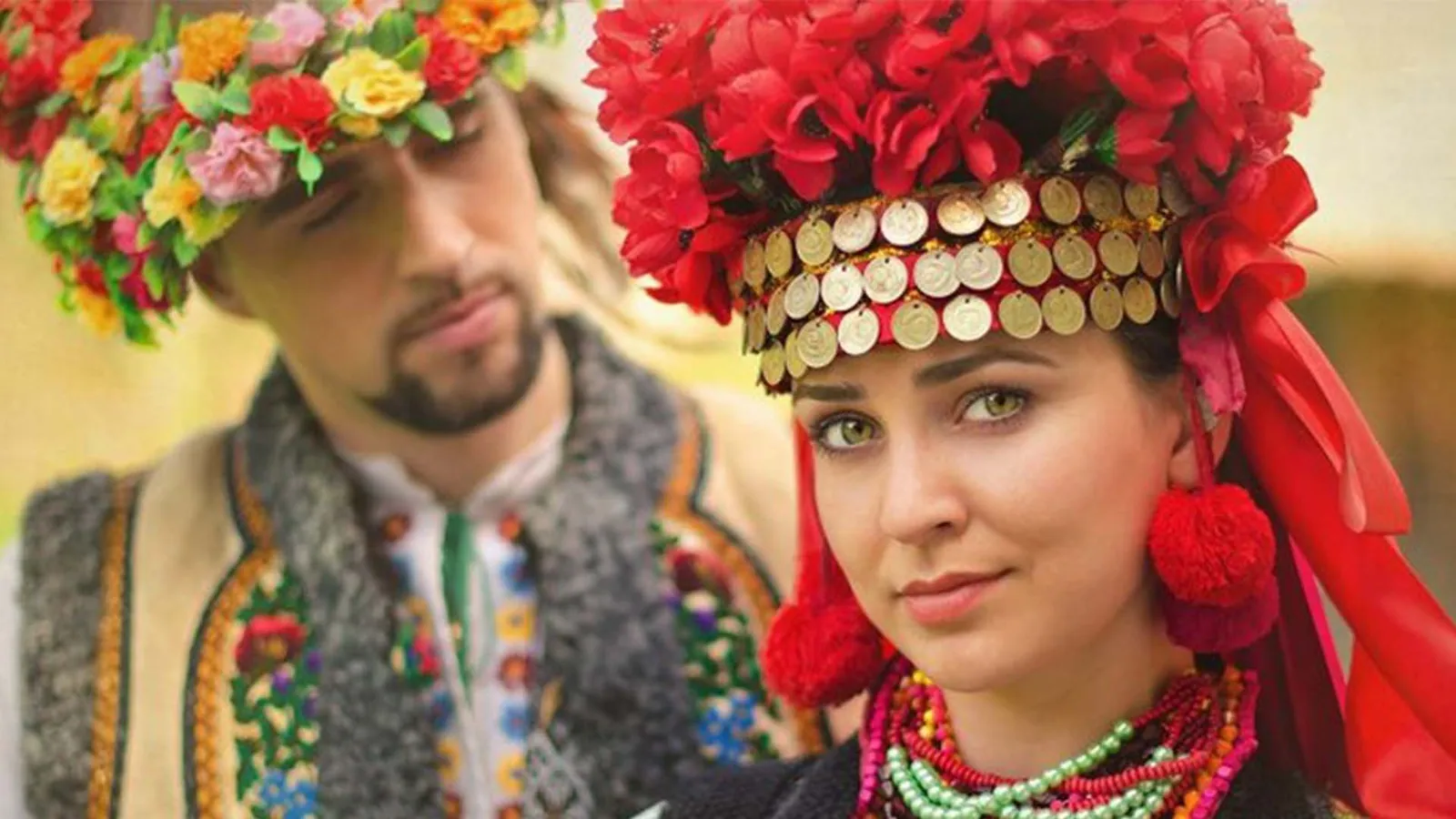
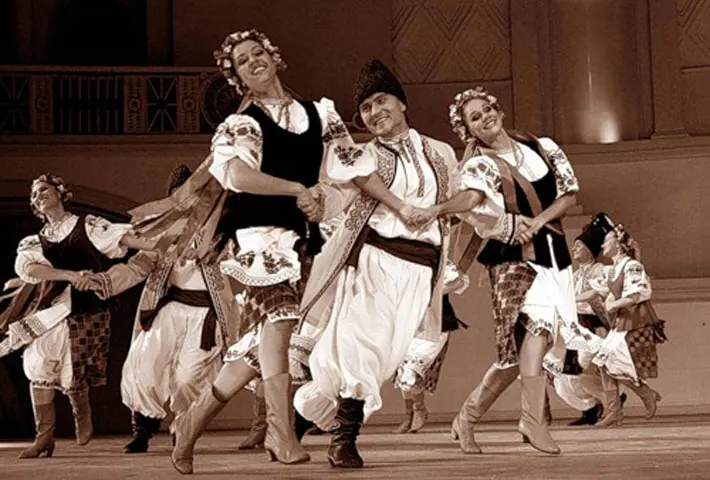
Not every dance now considered thoroughly Ukrainian actually started out that way. Alongside pieces rooted in ancient roundelays, wedding rituals or physical training, a real strand of Ukrainian folk dance was borrowed wholesale from neighboring cultures — Belorussian Lavonikha and Kryzhachok, Polish Krakowiak and Mazurka, Czech Polka, Hungarian Czardas, Moldavian Joc — and then quietly, thoroughly, made local.
The Czech Polka is probably the clearest example: it spread across the world and won over every audience it met, but nowhere more enthusiastically than in Ukraine, where dancers invented so many choreographic variations and composers wrote so many new melodies for it that Polka is now simply considered a Ukrainian folk dance in its own right. The French Quadrille followed a similar arc, and turned up one genuinely odd detail along the way: filmed in the Kyiv region, dancers were heard using a “code word” — “просо” (millet) — to signal a change of figure, borrowed directly from an old Ukrainian roundelay of the same name. Studied further across Kyiv, Khmelnytsky, Cherkasy, Chernihiv and Rivne, the imported Quadrille had drifted so far from its Parisian salon origins that it now reads as authentically Ukrainian, retaining only the loosest trace of its French source — Rivne’s “Shalantukh” variant, led by a stick-wielding solo dancer without a partner, is a good example of just how far that transformation went.
World War I brought the Two-step across the Atlantic via North American sailors, quickly nicknamed “Carapet” and absorbed into new Ukrainian steps like holubtsi and dribyshky, and even the waltz — the self-styled “King of Dance,” descended from the rustic German-Austrian Ländler — found its own niche, inspiring pieces like the “Tropak Waltz” and “Balamut.” None of this borrowing diminishes what these dances became; if anything, it’s the opposite. A dance that crosses cultures and comes out the other side beloved enough to be claimed as one’s own says something real about how living, evolving folk tradition actually works — not as a fixed inheritance, but as something continually being remade by whoever’s dancing it.