The Lemkos trace their roots to the White Croats, an East Slavic tribe who once lived on both sides of the western Carpathians — “white,” in old geographic color-coding, meant west, just as black meant north, red south and green east. The name “Lemko” itself is often traced to “lem,” a word the tribe used often in conversation meaning simply “only,” though Lemkos have traditionally called themselves Rusyns or Rusnaks rather than Lemkos.
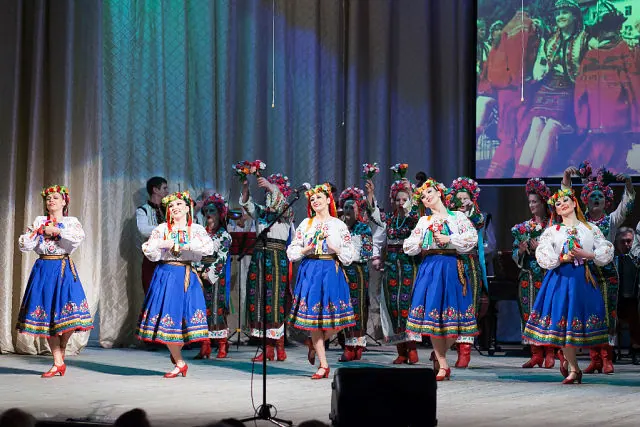
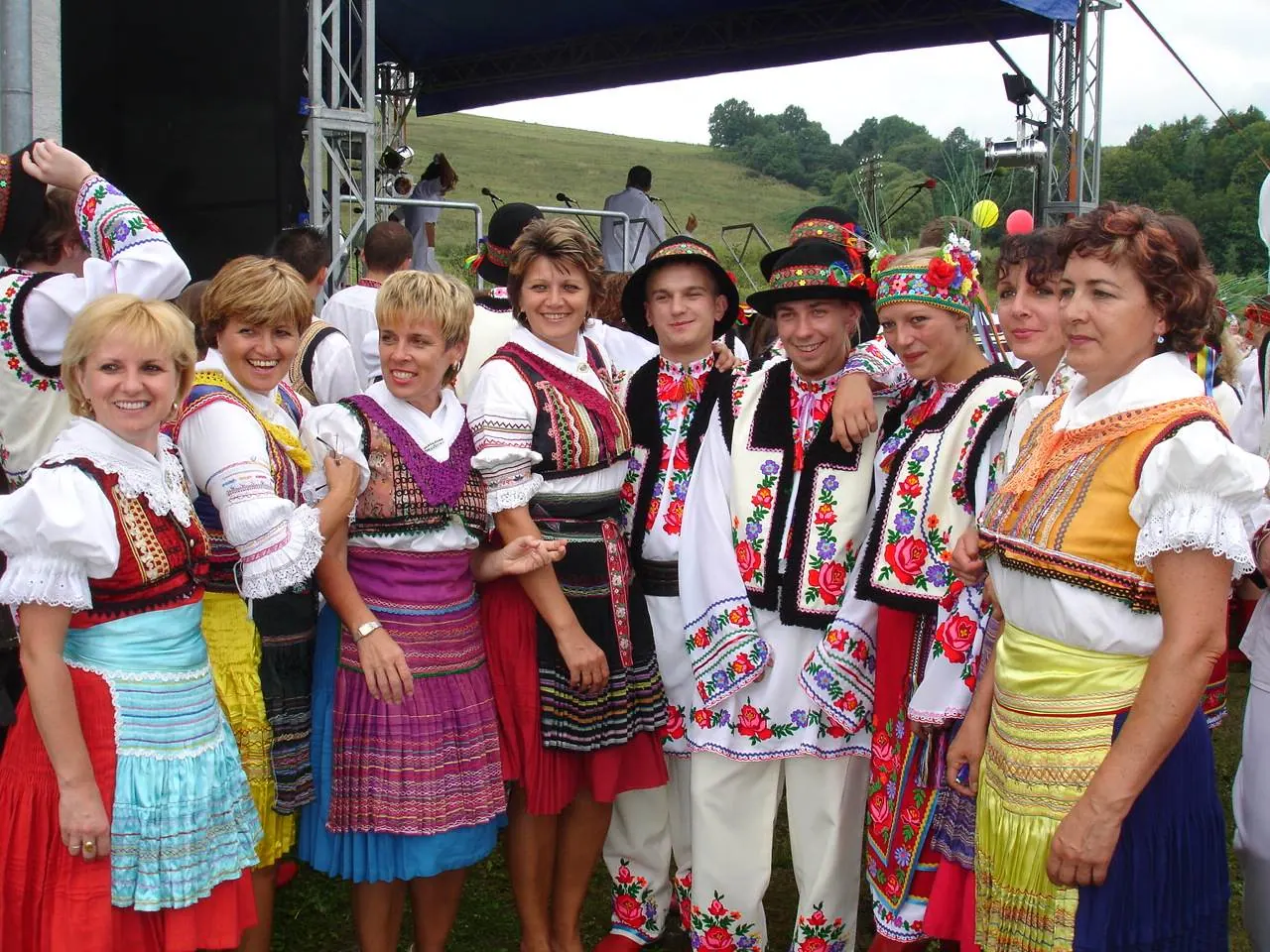
Their history took a brutal turn after World War II: between 1944 and 1946, roughly two-thirds of the Lemko population — around 95,000 people — were forced out of what is now Poland into the Soviet Union, and most of the rest were exiled to northwestern Poland during 1947’s Operation Vistula. Living for centuries at the far western edge of Ukrainian settlement meant Lemko culture absorbed real Hungarian, Czech, Slovak and Polish influence without ever losing its own distinct identity — visible today in everything from regional costume variation (Boyko-influenced near that border, Slovak-influenced further south) to a dance repertoire built from reworked Polish (“Krakowiak,” “Mazurka”), Czech (“Polka,” “Tromblia”), German (“Waltz”) and Hungarian (“Czardas”) forms, each one reshaped enough to carry a distinctly Lemko style and mannerism.
One of the oldest surviving Lemko dances, “Karichka” — from the Slovak word for “circle” — is built entirely around circular formations, big and small, and remains popular not just in Transcarpathia but among Lemko communities in Slovakia and Poland too. Groups like Poland’s Kyczera Lemko Folk Song and Dance Group have carried that repertoire onto festival stages across dozens of countries, keeping a genuinely embattled culture’s dance tradition visibly, actively alive.