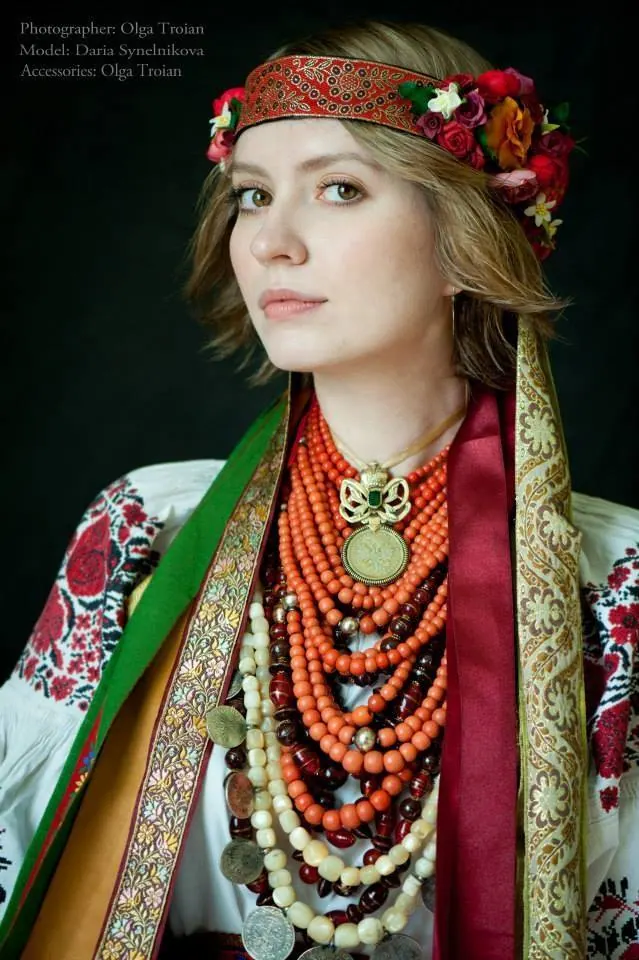
Korali — also called namysto, simply “necklace” — is probably the single most common piece of women’s jewelry in Ukrainian folk dress, and the material told you almost everything about the wearer. The most valuable necklaces were strung from coral, amber, pearls, garnet or fine glazed glass; in parts of western Ukraine, an older tradition even used shrub-seed “beads” called klokichka. Hutsul necklaces strung with Venetian glass beads imported from Italy carried real prestige, and 19th-century garnet-and-cobalt imports were especially popular among wealthier families. Amber necklaces, associated with Left-Bank Ukraine, were worn in the belief that they brought health and luck.
Coral, though, was the most popular material by a wide margin — so central that Ukrainian necklaces collected an entire vocabulary of names around it, from “genuine necklace” to “wise necklace.” Cheaper coral was cut into small tubes and cylinders; the finest was shaped into ovals or barrels, and a family’s wealth was visible at a glance in how many strands a woman wore — the richest could stack up to 25. In the Carpathians, coral necklaces were often layered with zgardy, cross-shaped amulets first given to girls at age six and added to year after year, building into an ever-growing set of protective rows.
Necklace-wearing followed its own social rules by age and season: pale or clear glass beads replaced red ones during mourning or Lent, women in their thirties often stopped wearing necklaces altogether, and elderly women wore little jewelry at all, and only in dark, understated colors. On holidays or at a zabava, though, women layered on as many strands as they owned — real coral for those who could afford it, colored glass for those who couldn’t — and it was widely believed that korali did more than decorate: a broken necklace thread was taken as a genuine warning of misfortune to come.