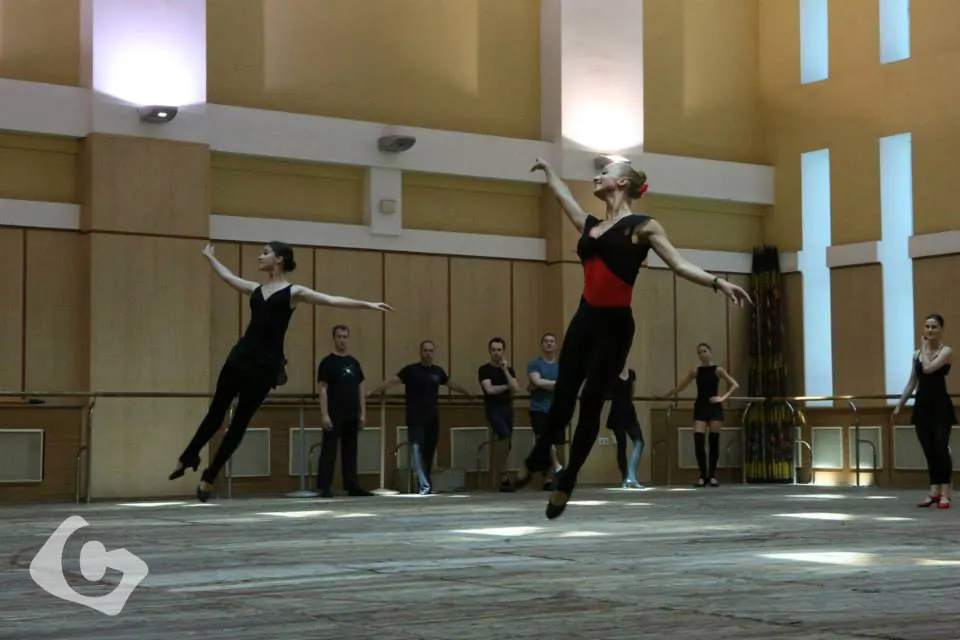
Ask anyone who dances at a serious performing level and you’ll hear some version of the same joke: Ukrainian dancers are chronically dehydrated, chronically sore, and chronically out of a social life. Most competitive or semi-professional ensembles rehearse two or three times a week, eight or nine hours in total, and that number climbs sharply whenever a big show or tour is coming up. “Sorry, I can’t — I have dance” becomes a genuinely familiar sentence, said to friends, to family, to yourself.
What that schedule actually builds, underneath the sore muscles, is discipline in the fullest sense — the same kind of willpower that shows up everywhere else in life once it’s trained. It’s the difference between spending a summer weekend at the lake and choosing the studio instead, between resisting a fourth slice of cake and pushing for one more inch of height on a jump. That trade-off isn’t unique to dance, either — it’s well documented that students who take up demanding extracurriculars like music tend to develop better study habits generally, simply because they’ve had to learn to budget their time.
The real reward isn’t just the performance itself, though walking on stage in front of a room of people is its own kind of payoff. It’s what the training does to a dancer between performances: a person who’s learned to show up, push through discomfort, and still find joy in small progress — on stage, and everywhere else that same discipline gets applied.