Podillia is a historic upland region of southwestern Ukraine, roughly 60,000 square kilometers of forest-steppe bounded by the Dnister River in the southwest, blending into Volhynia in the north, and descending gradually toward the Black Sea Lowland in the southeast. Today its territory maps mostly onto Ternopil, Khmelnytskyi and Vinnytsia oblasts, with smaller slices reaching into Lviv and Ivano-Frankivsk.
The name itself dates to the mid-14th century, though what it referred to shifted considerably over the centuries — originally a smaller stretch between the Strypa and Murafa rivers, later expanded under the Polish-Lithuanian Commonwealth to include Bratslav voivodeship as well, and stretched again by the early 20th century as far west as the Zolota Lypa River. Geography as much as politics shaped its history: sitting right at the edge of the steppe made Podillia a favorite target for nomadic raids for centuries, first from the Pechenegs, Cumans and Tatars, and heavily so from the mid-15th century onward — a pressure that, once it eased, opened the door for Polish settlers to move into the region’s fertile land.
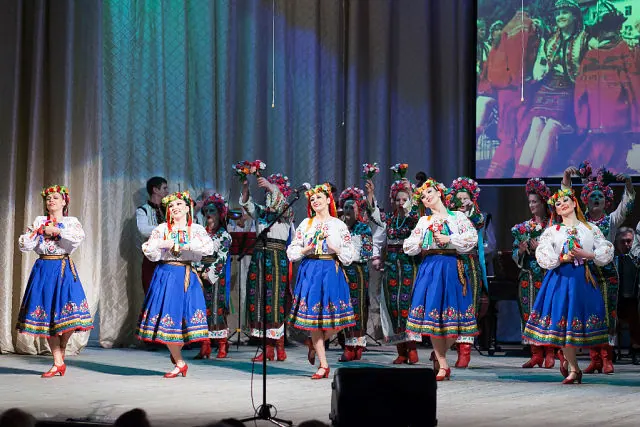
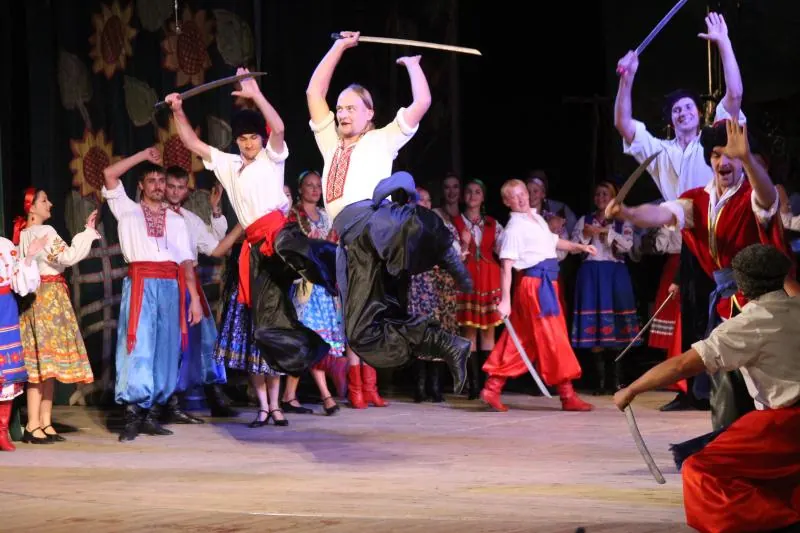
On stage, Podillia’s folk dance carries some of that layered regional identity — steppe-edge, forest-steppe and borderland all at once — feeding into a dance vocabulary that draws on both the settled agricultural traditions of the upland and the region’s long history of contact, and occasional conflict, with the steppe just beyond it.